Finn Bömer
The Terraform Labs Bankruptcy: Everything Creditors Need to Know in 2026
11 min read
Published by TerraClaim · March 2026
Last updated: March 19, 2026
In May 2022, the Terra ecosystem collapsed in what became one of the most devastating events in cryptocurrency history. Roughly $40 billion in value vanished in a single week. LUNA, once a top-ten cryptocurrency trading above $100, went to zero. UST, the algorithmic stablecoin that was supposed to always be worth one dollar, lost its peg and never recovered. The contagion spread beyond Terra — triggering the collapse of Three Arrows Capital, Celsius Network, and Voyager Digital in a cascade that reshaped the entire crypto industry.
Nearly four years later, the legal aftermath is still unfolding. If you lost money in the Terra collapse and filed a Crypto Loss Claim, here is a complete guide to where the case stands today, what money is available, who is being sued, and what happens next.
The Collapse: May 2022
The Terra ecosystem was built on a simple but fragile idea: an algorithmic stablecoin called UST that maintained its dollar peg through a mint-and-burn mechanism with LUNA, its companion token. When UST demand was high, LUNA was burned to mint UST, reducing LUNA supply and pushing its price up. When UST demand dropped, the reverse was supposed to happen.
The system worked — until it didn't.
On May 7, 2022, large UST withdrawals from the Curve 3pool decentralized exchange began destabilizing the peg. What followed was a textbook death spiral: as UST dropped below $1, the algorithm minted more LUNA to absorb the selling pressure. But more LUNA flooding the market pushed LUNA's price down, which reduced confidence in UST, which triggered more selling, which required even more LUNA to be minted. Within days, LUNA's circulating supply exploded from around 340 million tokens to over 6 trillion. The price went from $80 to fractions of a cent.
The damage wasn't contained to Terra. Three Arrows Capital (3AC), a major crypto hedge fund with heavy exposure to LUNA, collapsed within weeks. Celsius and Voyager, both lending platforms holding significant Terra-related positions, froze withdrawals and filed for bankruptcy shortly after. The total destruction across the ecosystem was estimated in the hundreds of billions of dollars.
Do Kwon, the founder and CEO of Terraform Labs, initially downplayed the collapse. Within months, he became one of the most wanted men in crypto.
The Legal Reckoning Begins: 2023–2024
In February 2023, the U.S. Securities and Exchange Commission filed civil fraud charges against Terraform Labs and Do Kwon, alleging a multi-billion-dollar securities fraud scheme. The SEC's complaint described a pattern of deception — misleading investors about UST's stability, fabricating usage metrics, and concealing the involvement of trading firms that secretly propped up the peg.
A month later, in March 2023, Do Kwon was arrested in Montenegro while traveling on forged passports. U.S. prosecutors had already unsealed an eight-count federal indictment carrying a maximum sentence of 130 years. After a protracted extradition battle, Kwon was delivered to the United States at the end of 2024.
Meanwhile, Terraform Labs filed for Chapter 11 bankruptcy in January 2024 in the District of Delaware (Case No. 24-10070). The filing set the stage for the formal recovery process that creditors are now navigating.
The Bankruptcy Plan Takes Shape: 2024
Several milestones followed rapidly in 2024.
In June 2024, the SEC settlement was finalized with a $4.47 billion judgment against Terraform Labs and Do Kwon. Critically, the SEC agreed to subordinate its own claim — meaning every dollar recovered goes to creditors first. The SEC will not receive any payment until all investors and creditors are paid in full. As part of this settlement, Do Kwon was ordered to pay at least $204 million to the estate.
In September 2024, Judge Brendan Shannon confirmed the Chapter 11 Plan of Liquidation. The plan established the Wind Down Trust as the vehicle for distributing assets to creditors, and appointed Todd Snyder of Piper Sandler as the Plan Administrator — the person responsible for reviewing claims, pursuing lawsuits, and ultimately distributing whatever money is recovered.
The plan's effective date was October 1, 2024. From that point forward, Terraform Labs was being wound down. The company would eventually cease all operations entirely on January 16, 2026.
The Claims Process: 2025
The Crypto Loss Claims portal opened on March 31, 2025, through claims.terra.money, administered by Kroll Restructuring Administration LLC. Creditors who lost money in the Terra collapse had until May 16, 2025, to submit their claims — a deadline known as the "bar date." By the time it closed, 15,980 claims had been filed. The court later allowed 660 additional late filers, bringing the total to 16,640 Crypto Loss Claims.
Filing a claim required creditors to provide extensive documentation: wallet addresses, transaction logs, exchange API keys, and proof of ownership for every eligible cryptocurrency they held. The process was thorough by design — the Plan Administrator needed to verify each claim's validity and calculate the precise loss amount.
Starting in August 2025, the Plan Administrator began issuing "Initial Determinations" — preliminary assessments of each claim's value. These were sent in rolling batches. Creditors had the option to accept the determination or dispute it within 60 days.
As of February 2026, based on the Plan Administrator's Third Status Update (Docket 1177), the review progress looks like this: 8,449 of the 16,640 claims have received Initial Determinations, representing about 51% of the total. Of those determined, roughly 87% have been accepted by creditors and now carry "Allowed" status. About 13% have been disputed and are awaiting further review.
An additional 3,760 claimants were asked to provide supplementary evidence. Of those, 89% have responded with their submissions now under review. Another 3,129 claims remain in Individualized Review, which typically means the documentation was complex or incomplete. And zero Final Determinations have been issued so far — meaning no claim has been permanently and irrevocably settled.
The Do Kwon Criminal Case
Running parallel to the bankruptcy, the criminal case against Do Kwon moved forward.
In August 2025, Kwon pleaded guilty to conspiracy to commit fraud and wire fraud. Prosecutors sought twelve or more years in prison. Kwon's defense team argued for five.
On December 11, 2025, the judge sentenced Kwon to 15 years in federal prison, calling the scheme "fraud on an epic, generational scale." Kwon was also ordered to forfeit $19 million. He may face additional proceedings in South Korea.
While the criminal case provides a measure of justice, its direct financial impact on creditor recovery is limited to the forfeiture and the $204 million ordered through the SEC settlement. The real financial upside for creditors lies elsewhere.
The Money: How Much Is Available?
The Plan Administrator has estimated the total compensation available to creditors could range from approximately $185 million to $442 million. As of late 2025, roughly $300 million in assets had been recovered.
These funds flow through a specific legal structure called the distribution waterfall, and understanding it is essential for any creditor evaluating what their claim might ultimately be worth.
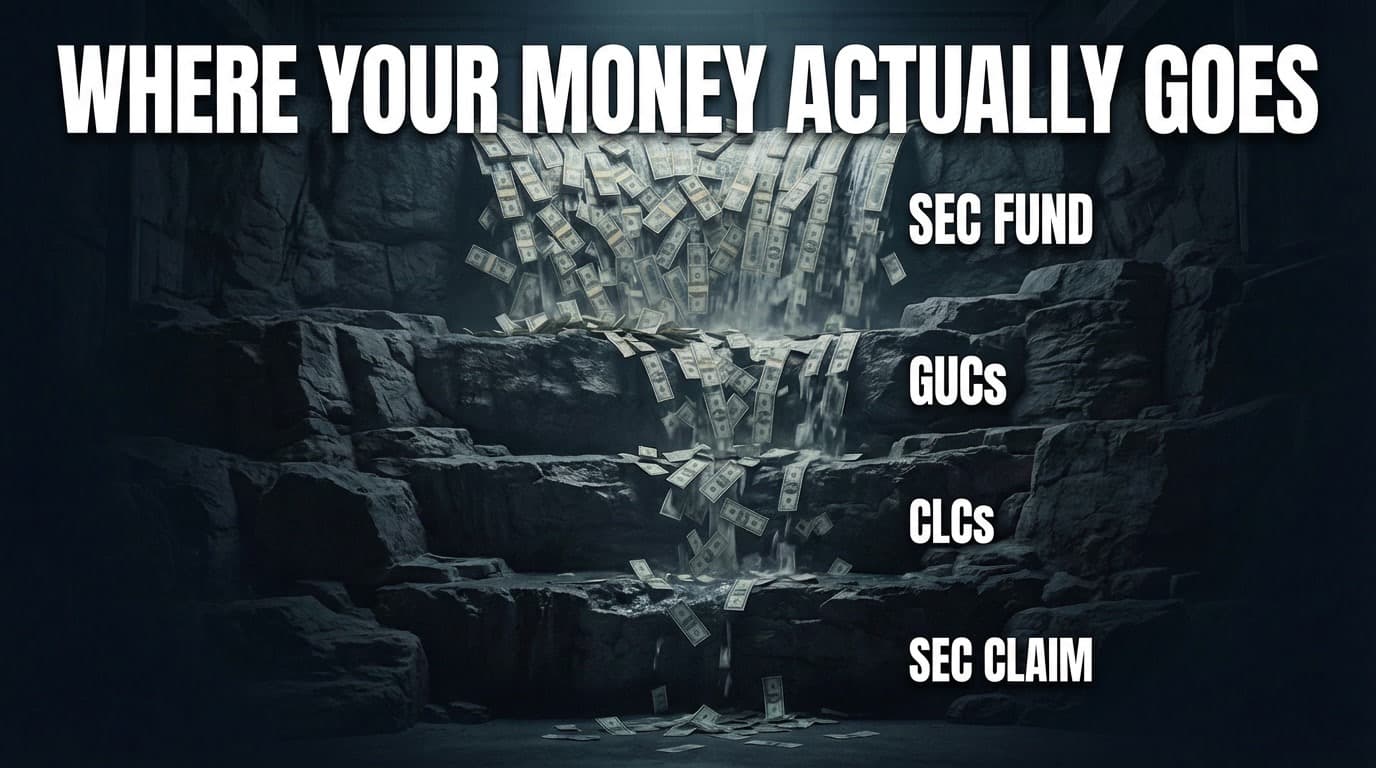
The waterfall works like this:
First, priority claims (Class 1) and secured claims (Classes 2 and 3) are paid. These are relatively small and are expected to be covered in full.
Second, General Unsecured Claims (Class 4, or "GUCs") are paid first and in full from the GUC Pool. These are the trade creditors, vendors, and other pre-petition obligations of Terraform Labs.
Third — and this is the critical part — only after GUCs are paid in full does the remaining money flow to Crypto Loss Claims (Class 5, or "CLCs"). CLCs are subordinate to GUCs in the distribution waterfall. They are not co-equal.
Fourth, the SEC's $4.47 billion claim (Class 6) sits at the very bottom. It receives nothing until every other creditor class is fully satisfied.
There is one important carve-out: the $204 million from the SEC Settlement Fund is ringfenced specifically for CLC holders. This money flows directly to Crypto Loss Claims regardless of what happens with the GUC Pool.
The 3AC Complication
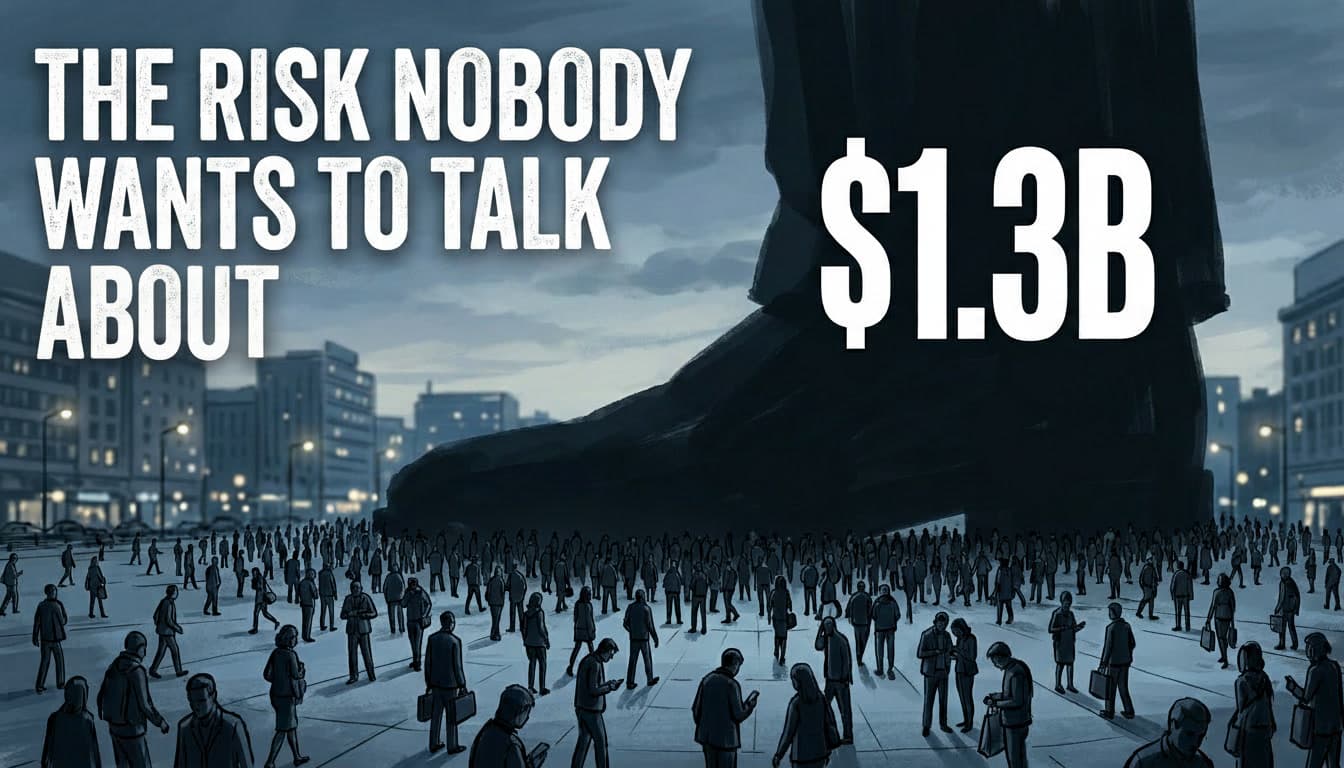
In October 2025, Three Arrows Capital's $1.32 billion claim against the Terraform estate was approved — and classified as a Crypto Loss Claim. This means 3AC sits in the same pool as individual creditors who lost money in the collapse.
The impact is significant. When the CLC Pool is divided pro rata among all Allowed Claims, 3AC's $1.32 billion claim represents a massive share of the total. This dilutes the recovery for every individual creditor.
The situation could get worse: if 3AC's claim were ever reclassified from a CLC to a General Unsecured Claim, it would jump ahead of all individual CLC holders in the payment waterfall. At $1.32 billion, it could potentially absorb the entire GUC Pool, leaving individual CLC holders with only the $204 million SEC Settlement Fund to split among 16,000+ claims.
Legal experts consider reclassification unlikely at this stage — but it remains a risk that creditors should understand.
The Game-Changers: Two Major Lawsuits
While the base distribution pool is relatively modest compared to the total claims filed, two major lawsuits filed by the Plan Administrator could dramatically change the recovery outlook.
The Jump Trading Lawsuit ($4 Billion) — Filed December 19, 2025, in the Northern District of Illinois. The Plan Administrator alleges that Jump Trading entered into secret agreements with Terraform Labs, purchased LUNA at $0.40 per token while it traded above $100 on the open market, and secretly propped up the UST peg during an earlier crisis in May 2021 — creating a false impression of stability that kept retail investors in the ecosystem. The complaint claims Jump walked away with nearly $1 billion in profits while ordinary investors suffered a total loss. Jump Trading has called the lawsuit "desperate" and "baseless." Read our full analysis: The Jump Trading Lawsuit — $4 Billion at Stake.
The Jane Street Lawsuit — Filed February 23, 2026, in the Southern District of New York (Case 1:26-cv-01536). The Plan Administrator alleges that Jane Street used material non-public information — obtained through a former Terraform intern named Bryce Pratt — to execute a massive $85 million UST swap on the Curve 3pool within minutes of a secret Terraform withdrawal on May 7, 2022. The complaint describes this as the single largest swap that precipitated the death spiral. The lawsuit brings 18 counts including insider trading, Rule 10b-5 fraud, and unjust enrichment. Read our full analysis: The Jane Street Lawsuit — The Second Front.
If even a fraction of the Jump Trading claim is recovered, the distributable pool would increase dramatically. And the Jane Street case opens a second front that could add further recoveries. The Plan Administrator has also indicated that additional lawsuits against other third parties are being investigated.
What Happens Next
Several key milestones lie ahead:
The Plan Administrator continues processing the remaining 8,191 claims that have not yet received Initial Determinations. The pace is slowing as more complex cases remain.
The dispute resolution process needs to play out for the approximately 13% of claims that have been disputed. Once disputes are resolved, the Plan Administrator will begin issuing Final Determinations — the step that permanently settles a claim's value.
The Jump Trading lawsuit is in early stages. Discovery, motions, and a potential trial could take years. Jump is vigorously contesting the claims.
The Jane Street lawsuit was just filed. An answer is due by April 27, 2026, though this deadline is extendable. Like the Jump case, this will take years to resolve through the courts.
The Plan Administrator has stated he is investigating additional claims against other third parties and will file further actions. We don't yet know who these targets are.
No distribution date has been announced or estimated. First distributions will require substantially all claims to be resolved — and even then, the pro rata calculation cannot be finalized until the total pool of Allowed Claims (including 3AC's $1.32 billion) is known.
Your Claim Has Value Today
The uncertainty around timing and recovery amounts is exactly why a secondary market for Terra claims exists. Institutional buyers — hedge funds and distressed asset specialists — are willing to pay cash today for the right to receive future distributions. They accept the risk and the wait. Sellers get certainty and liquidity now.
And selling no longer means walking away from your claim entirely. Because the Terra case has a unique profile — a low floor driven by existing estate assets, but significant upside tied to ongoing litigation against Jump Trading, Jane Street, and others — TerraClaim's legal and technical team developed a recovery-sharing mechanism specifically adapted to this market. Instead of a flat purchase at a few cents on the dollar, every trade on TerraClaim guarantees you cash at closing — and on claims of $100k and above, a built-in structure continues to pay you a share of future distributions as the estate recovers funds. If the lawsuits succeed and recovery exceeds expectations, you participate in that upside automatically. You are not choosing between selling and waiting — you are doing both.
If you hold a Crypto Loss Claim and want to understand your options, TerraClaim operates a marketplace specifically for Terra bankruptcy claims. We connect sellers with verified institutional buyers, handle all the legal paperwork, charge zero seller fees, and facilitate payment directly to your bank account or crypto wallet.
Whether you choose to hold your claim and wait for distributions, sell for immediate cash with continued upside participation, or simply learn more about the process — the most important thing is to understand where the case stands and make an informed decision.
TerraClaim is a marketplace for Terraform Labs bankruptcy claims. We are not lawyers and this is not legal or financial advice. For legal questions about your specific claim, consult a qualified attorney. Case information is sourced from public court filings, including the Plan Administrator's Third Status Update (Docket 1177, filed February 17, 2026) and other documents available through the Kroll restructuring portal and PACER.
Track the case in real time: TerraClaim Case Timeline