Finn Bömer
What Happened to Terra Luna? The Collapse, the Lunatics, and the Money in 2026
8 min read
Published by TerraClaim · August 2026
In May 2022, roughly $40 billion in value disappeared from the Terra ecosystem in about a week. Four years later, “what happened to Terra Luna” has three different answers, because Terra Luna became three different things: a community-run blockchain called Terra Classic, a quieter successor chain called Terra 2.0, and a bankruptcy estate in Delaware that owes money to roughly 16,640 creditors.
If you lost money in the collapse, the third one concerns you most. But to understand where your claim fits, it helps to see the whole picture, including what the community that still calls itself the Lunatics is building today.
The collapse, in short
Terra was built around UST, an algorithmic stablecoin designed to hold $1 through a mint-and-burn mechanism with its sister token LUNA, and around Anchor Protocol, which paid roughly 20% yield on UST deposits. In early May 2022, UST lost its peg. The stabilization mechanism responded by minting LUNA at an accelerating rate, and within days the supply hyperinflated from around 350 million tokens to over 6.5 trillion. LUNA fell from over $80 to fractions of a cent. UST never recovered.
The damage did not stay contained. The collapse helped bring down Three Arrows Capital, Voyager, and Celsius, and set the stage for the broader chain of failures that ended with FTX six months later.
One name, two chains
At the end of May 2022, the Terra community voted through Proposal 1623 to fork the network. A brand-new chain launched under the name Terra, with a new LUNA token airdropped to the holders who had just been wiped out. The original chain kept running under the name Terra Classic, its tokens renamed LUNC (Luna Classic) and USTC (TerraClassicUSD), with no algorithmic peg mechanism left to defend.
The two chains have had very different lives since.
Terra 2.0 launched near $18 and has drifted down ever since. The chain still runs and LUNA still trades on major exchanges, but activity is thin, and with Terraform Labs winding down under its bankruptcy plan, the company that built it no longer supports it. Remaining Terraform-linked products and tooling have been handed off or prepared for sale to independent teams.
Terra Classic went the opposite direction: total abandonment by its creators, followed by total adoption by its community. When the developers moved on, a group of validators, independent developers, and holders kept the nodes running and took over governance. Today, Terra Classic has no company, no CEO, and no foundation roadmap. Every change to the chain passes through on-chain votes by token holders.
Who are the Lunatics in 2026?
“Lunatics” started as the pre-crash self-identifier of Terra’s famously devoted community. Today it mostly describes the Terra Classic community, sometimes called the LUNC Army: the people who stayed. Whatever you think of their odds, they have kept a chain that most of the industry wrote off in 2022 running for four years on volunteer labor and on-chain coordination alone.
Their agenda in 2026 comes down to four things:
- Shrink the supply. Every on-chain transaction pays a burn tax. In August 2026, governance Proposal 12223 raised that tax from 0.5% to 1.5%, with 1.2% permanently burned and the remainder split between the community and oracle pools. Binance runs a separate voluntary monthly burn funded by its LUNC trading fees. Together, these programs have destroyed over 450 billion LUNC since May 2022.
- Repeg USTC. The renamed stablecoin still trades around two cents. Active governance proposals aim to relaunch it as a collateralized stablecoin rather than an algorithmic one, including USTC staking (Proposal 12219) and collateral-based repeg designs working their way through votes.
- Rebuild the infrastructure. Upgrades such as Market Module 2.0, newer Cosmos SDK versions, and improved IBC connectivity are moving through governance, alongside independent projects like Juris Protocol building on the chain.
- Prove that a community can run a chain. For many Lunatics, this is the real point. Terra Classic has become an experiment in whether a blockchain can outlive its own creators.
Honesty requires the other half of the picture. Around 5.5 trillion LUNC remain in circulation, so four years of burning has removed roughly 7% of the supply. The repeg has not happened. And the community’s efforts, however real, have no connection to the money the bankruptcy estate owes creditors. That distinction matters, and we will come back to it.
Do Kwon: the legal endgame
The man at the center of the collapse has reached the end of his American legal road. Do Kwon was arrested in Montenegro in March 2023 while traveling on falsified documents, extradited to the United States on December 31, 2024, and pleaded guilty in August 2025 to wire fraud and conspiracy charges. On December 11, 2025, Judge Paul Engelmayer of the Southern District of New York sentenced him to 15 years in prison, describing the scheme as fraud on an “epic, generational scale.” Kwon agreed to forfeit over $19 million, and South Korea is still pursuing its own charges against him.
For creditors, the criminal case delivered accountability, not recovery. The money owed to Terra’s victims flows through a different channel entirely: the bankruptcy.
Terraform Labs today: an estate, not a company
Terraform Labs filed for Chapter 11 in Delaware on January 21, 2024 (Case No. 24-10070). In June 2024 it reached a settlement with the SEC totaling approximately $4.47 billion, and later that year the court confirmed a wind-down plan built around one priority: liquidating what remained of the company and distributing the proceeds to the token holders it harmed. As part of the wind-down, Terraform agreed to burn its own token holdings and permanently ended support for both chains.
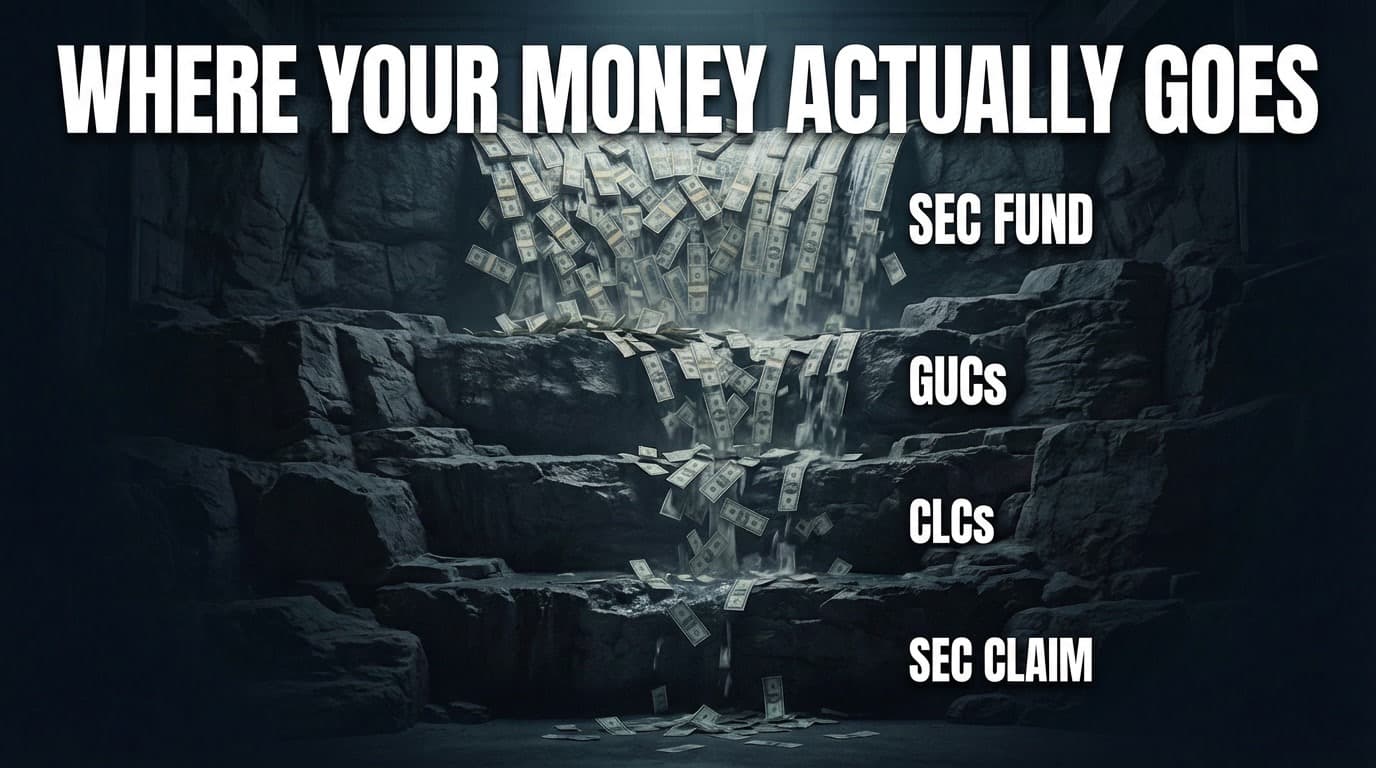
Roughly 16,640 people and entities filed Crypto Loss Claims (CLCs) through Kroll, the court-appointed claims agent. Court filings have projected a distributable pool in the range of $185 million to $442 million, a figure that moves as the estate monetizes assets and, more importantly, as its lawsuits progress.
Those lawsuits are the wild card. In December 2025, Plan Administrator Todd Snyder sued Jump Trading in federal court in Illinois, seeking over $4 billion over allegations that Jump secretly intervened to restore UST’s peg in 2021 in exchange for steeply discounted tokens, masking the system’s fragility. In 2026, the estate followed with a suit against Jane Street in the Southern District of New York (Case No. 1:26-cv-01536), alleging that the firm’s trading activity helped set off the May 2022 depeg. These are allegations, not judgments. Neither case has been resolved, and neither has a predictable timeline. If either produces a significant recovery, the pool available to CLC holders grows. If not, it does not.
As of this writing, no distributions have been made to Crypto Loss Claim holders, and current expectations point to 2027 at the earliest for a first payment, with any litigation-driven recoveries potentially arriving years after that.
A token is not a claim
Here is the distinction that gets lost in almost every Terra conversation online: holding LUNC today and holding a Crypto Loss Claim are two completely different positions.
Your LUNC rides on burns, repeg proposals, and market sentiment. Your CLC rides on the bankruptcy estate: its cash, its asset sales, and its lawsuits against Jump Trading and Jane Street. A successful USTC repeg would not add a dollar to your claim. A Jump Trading settlement would not burn a single LUNC. Two assets, two theses, two timelines.
Which means being a Lunatic and being a creditor are separate decisions. You can believe in the community’s revival effort and still make an independent, clear-eyed choice about what to do with your claim.
If you hold a Crypto Loss Claim, you have two options
Hold it. You keep 100% of whatever the estate ultimately distributes, whenever it distributes it. Be clear-eyed about what that means, though: you are choosing to keep an illiquid, highly speculative asset whose ultimate value depends heavily on two lawsuits with unknown outcomes and no fixed timelines, and whose first payment is not expected before 2027. If you are comfortable with that, and you are choosing it deliberately rather than by default, holding is a legitimate position.
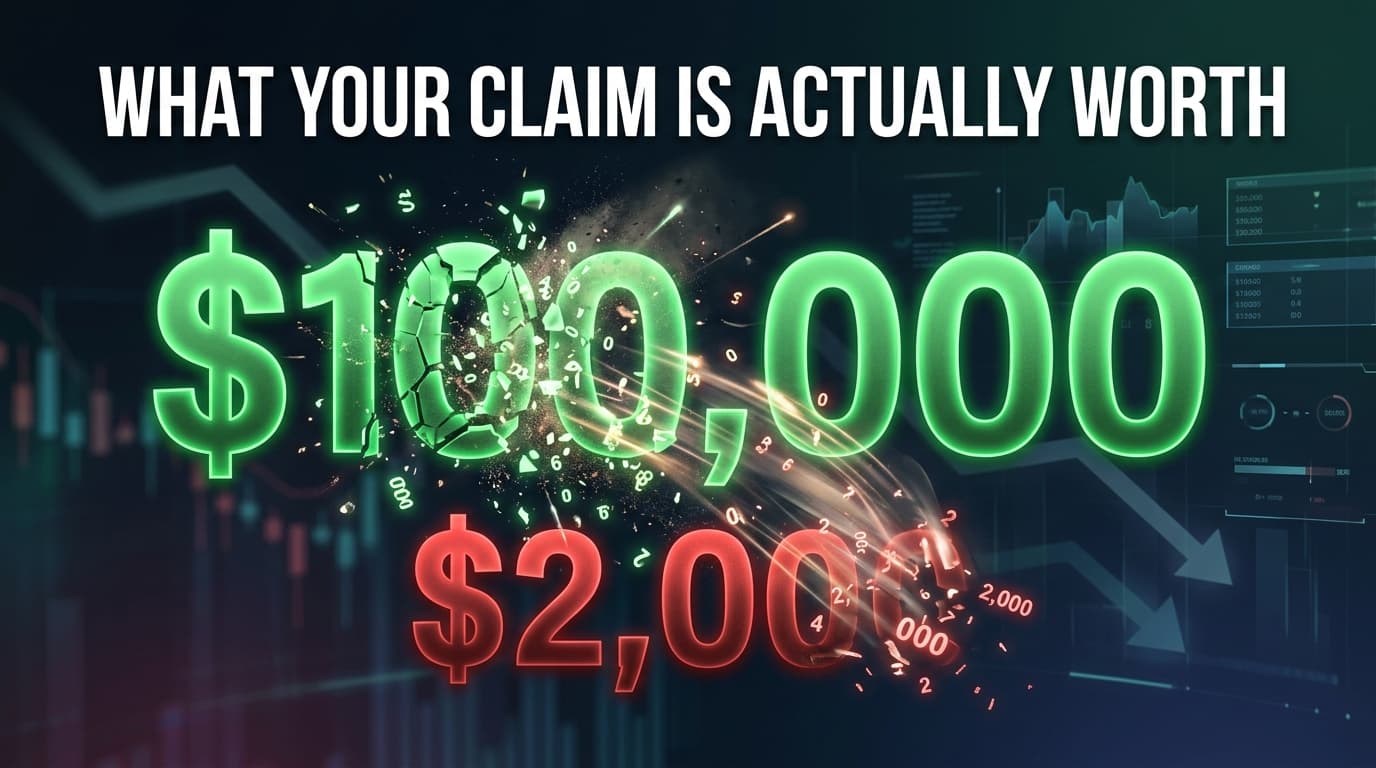
Sell it. Bankruptcy claims are transferable legal assets under Federal Rule of Bankruptcy Procedure 3001(e), and an active secondary market for Terra CLCs now exists. Selling converts an uncertain multi-year payout into cash today, and cash today is capital you can put back to work in areas where you have knowledge, control, and an actual edge. A bankruptcy claim is the opposite: you cannot influence the outcome, you cannot accelerate it, and you have no informational advantage over anyone else in the case. On TerraClaim, sellers pay zero fees, and every sale includes our Excess Claim Provision: you receive the purchase price up front and keep 25% of any estate distributions above the buyer’s total acquisition cost. In plain terms, if the lawsuits pay off in a big way, you still participate in part of the upside even after selling. Transfers are executed through signed agreements and filed on the public court docket, and the paperwork addresses how any distribution made after your sale is passed through, so record-date timing is handled contractually rather than left to chance.
There is no universally right answer, only the right answer for your situation: your need for liquidity, your risk tolerance, and how long you are willing to wait.
If you want to know where the market values your claim today, you can request an offer at terra-claim.com. It costs nothing and commits you to nothing. And if you already have a number in mind, the amount you would be happy to walk away with, get in touch and tell us. We are always open to that conversation. We built TerraClaim because we were Terra creditors ourselves, and we think every claim holder deserves to know the option exists.
Disclosure: TerraClaim LLC operates a marketplace for Terraform Labs Crypto Loss Claims and earns a fee from buyers on completed transfers. We have a direct commercial interest in claims trading activity. Nothing in this article is legal, financial, or investment advice. Figures are drawn from public court filings, public blockchain data, and news reporting as of August 2026 and are subject to change.